
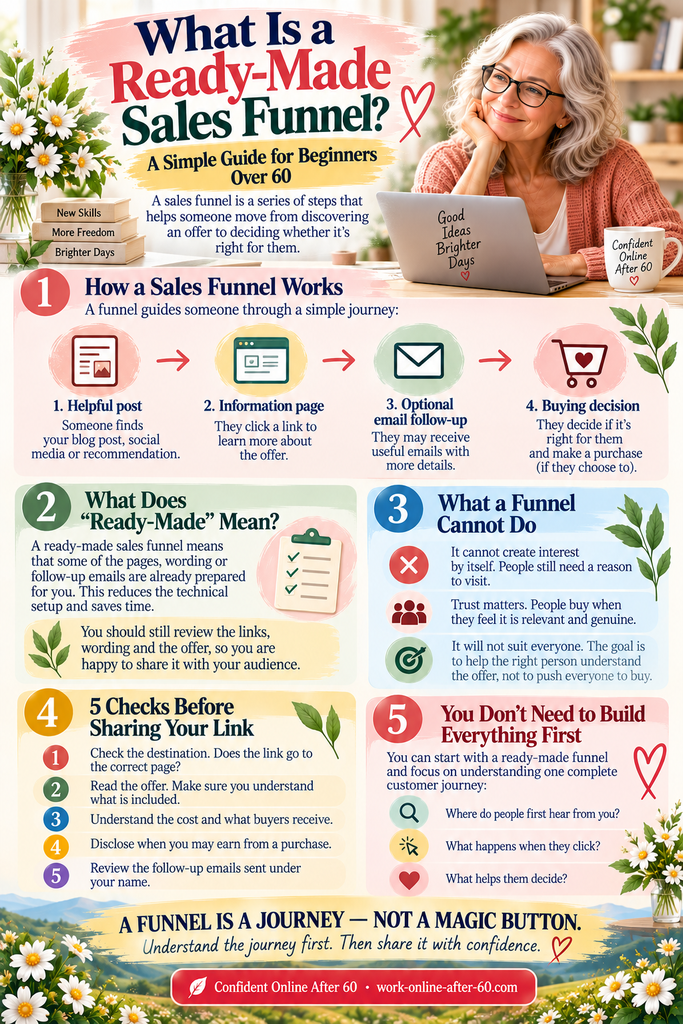
A sales funnel is a series of steps that helps someone move from discovering an offer to deciding whether it is right for them.
The name sounds technical, but the idea is familiar.
Think about finding a useful book. You notice a recommendation, read the description, look at the contents and then decide whether to buy. An online funnel organises a similar journey.
Affiliate disclosure: I am an AI Business Builder affiliate. If you join through my link, I receive a referral payment.
A simple example
Imagine you share a useful post about learning AI after 60.
A reader wants to know more and clicks a link. They reach a page explaining a resource. They may choose to request further information by email, or read the offer and decide whether to join.
The journey could look like this:
Helpful post → information page → optional email follow-up → buying decision
Not every funnel uses all four steps. Some send readers directly to an offer page.
What does “ready-made” mean?
It usually means that some of the pages, wording or follow-up messages have already been prepared.
AI Business Builder advertises prepared funnels and follow-up emails. Source: AI Business Builder
That can reduce the amount of setup you need to do. However, you should still review anything that will appear under your name.
Check the links, read the wording and make sure you understand the offer before inviting people to use it.
What a funnel cannot do for you
A funnel does not create interest simply by existing.
People need a reason to visit it. That reason might be a useful article, a thoughtful answer to a question or a relevant recommendation.
Trust also matters. If someone arrives because of an exaggerated promise, a polished page will not turn that promise into a good customer experience.
Your job is to help the right person understand the offer—not to push every visitor towards a purchase.
Five checks before sharing your link
Check the destination. Open the link yourself and confirm it leads to the correct page.
Read the offer. Make sure the description matches what you have told your audience.
Understand the cost. Know what buyers receive and whether any other expenses may be involved.
Explain your connection. Tell readers when you may earn from their purchase.
Review the follow-up. If emails are sent under your name, make sure they reflect how you want to communicate.
These checks are useful even when someone else has built the pages.
You do not need to build everything first
One reason beginners become overwhelmed is the belief that they need a website, a newsletter and several social accounts before they can begin.
A more manageable learning task is to understand one complete customer journey.
Where does someone first hear from you? What happens when they click? What information helps them decide?
Once those steps make sense, the word “funnel” becomes much less intimidating.
Explore AI Business Builder if you would like to see the offer behind this example. Take time to understand the journey before sharing it with others.
Related guides for your next step
To explore this further, read AI Business Builder Cost: Joining Fees and Extra Tools and Starting an AI-Assisted Business After 60: Skills You Need. Choose the guide that answers your next practical question.

Leave a Reply