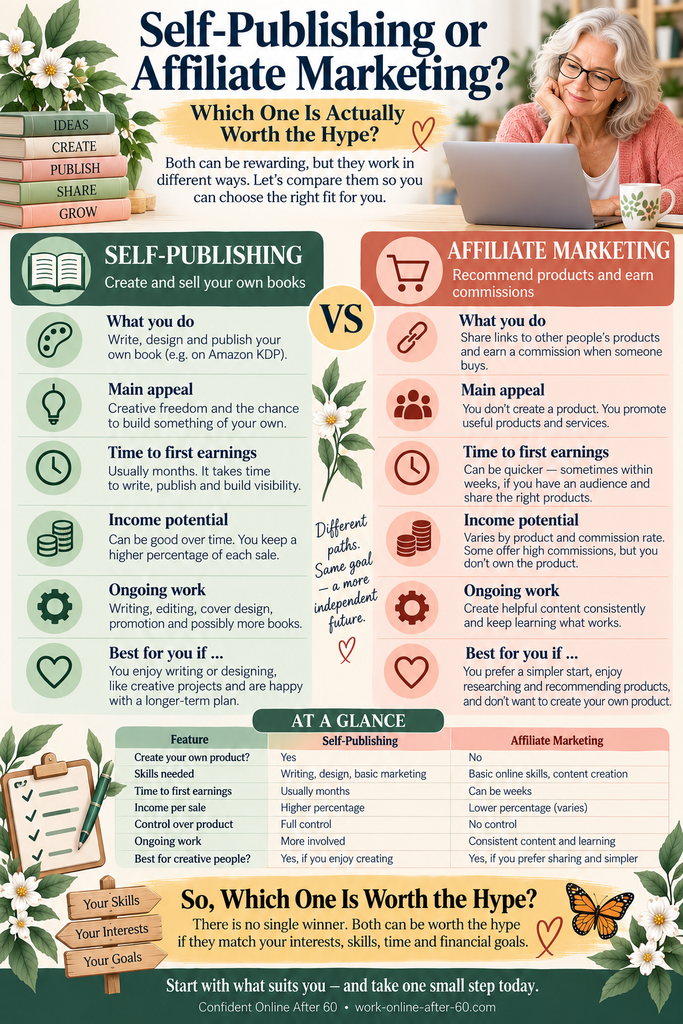
Self-publishing and affiliate marketing can both be worthwhile, but neither deserves belief simply because someone shares impressive earnings. The useful comparison is what remains after costs, how much work is involved and whether the model fits your audience and goals.
My three years in KDP taught me to look beyond the excitement of having a product for sale. Regular advertising costs and the wait for royalty payments made the business more complicated than the publishing step alone suggested.
Start by defining “worth it”
For one person, a worthwhile result is completing a book their family can keep. For another, it is earning a modest amount after expenses. Someone else wants a business that can grow without producing a new book each time.
Write your own goal before comparing offers. Include the time you are willing to spend, the money you can risk and the kind of work you want in your week. Otherwise, someone else’s sales target can quietly become your definition of success.

Five questions to ask about an income claim
- Is this revenue, royalty, commission or profit? These figures measure different things.
- What expenses are missing? Consider advertising, tools, production and paid support.
- How long did the result take? A screenshot may omit months or years of audience building.
- What advantages did the person start with? An established audience and earlier experience matter.
- Does the example tell us anything about ordinary participants? A selected success story is not evidence of a typical result.
These questions apply to book publishing, affiliate programmes and course promotions, including POP. A useful explanation should make the model clearer without asking you to treat someone else’s result as your forecast.
Compare money kept, not just money shown
Here is an illustration using invented figures. If a book contributes £3 per sale after platform deductions, 50 sales produce £150 before your own expenses. If advertising and other costs total £120, £30 remains before tax and recovery of earlier production costs.
Suppose a qualifying affiliate sale instead earns a £60 commission. Three approved sales produce £180. With £150 in advertising and tools, £30 remains. Any later reversal could reduce it further.
The different headline amounts lead to the same result in this example. This does not estimate actual conversion rates or typical income; it shows why commission size alone cannot decide which model is better.

“No product to create” still leaves a business to build
Affiliate marketing can remove the job of creating the product being sold. You still need to understand that product, make accurate recommendations and reach people who might benefit. Content production, research and maintaining trust are real work.
Similarly, a ready-made product with resale rights can reduce product-development work, but it does not supply a guaranteed stream of buyers. Reselling also brings responsibilities defined by the licence and selling arrangement.
“Passive income” can hide ongoing tasks
A book or article may remain available after you create it. That does not mean earnings continue automatically. Information becomes outdated, offers change, readers ask questions and traffic can fall.
Consider whether you are comfortable maintaining the work. A smaller collection of useful, current content may be more manageable than a large catalogue you cannot keep up with.
Do not confuse a sale with cash in your bank
KDP has a payment lag, discussed in our self-publishing income guide. Affiliate programmes also set payment conditions, and some commissions may be pending before they are approved. Check the actual programme and payment arrangements.
If cash flow was the difficulty in your previous business, make payment timing one of the first questions you ask about a new one. Do not accept “you keep the sale” as a complete explanation of when funds become available or what costs remain.
How to assess POP without relying on hype
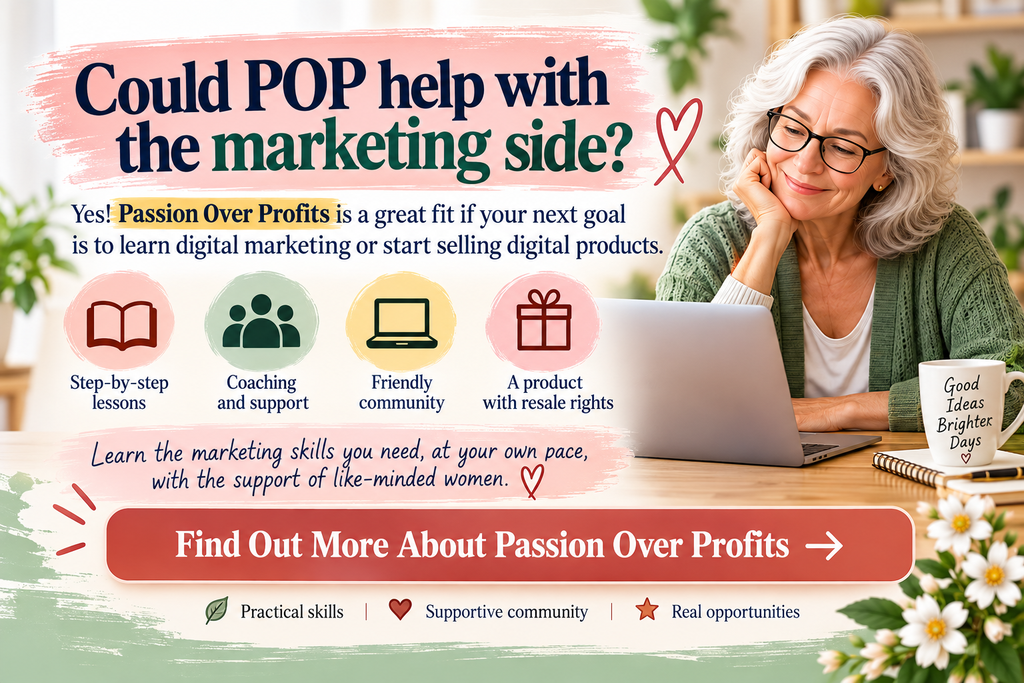
The provider presents Passion Over Profits as marketing training with coaching, community resources and a digital product carrying resale rights. Our overview records a listed price of US$997 and explains the provider’s descriptions.
Ask whether the lessons address the skill you want to develop, whether you can attend or use the support and whether the full cost fits your budget. Read the licence and current purchase terms. The continuing-coaching promise described in the presentation should not be mistaken for a cash payment or guaranteed earnings.
Explore Passion Over Profits: what’s included, how the model works and whether it fits your goals
A better decision than following the next success story
Choose a small, measurable experiment. For publishing, that might be improving one book’s description and tracking the outcome. For affiliate marketing, it might be creating a useful comparison for a clearly defined audience without paying for traffic.
Review the time spent, audience response and costs before expanding. A lack of immediate sales is information to examine, not an automatic reason to buy more training.
If you are choosing your first project, use our beginner comparison. If creative fulfilment matters as much as money, read how a creative person can choose between publishing and affiliate marketing.
Is either model worth trying?
It can be, when the work interests you, the commitment is manageable and you understand the uncertainty. The strongest reason to begin is a clear fit with your goals and a realistic next step, rather than the size of somebody else’s earnings claim.
Leave a Reply