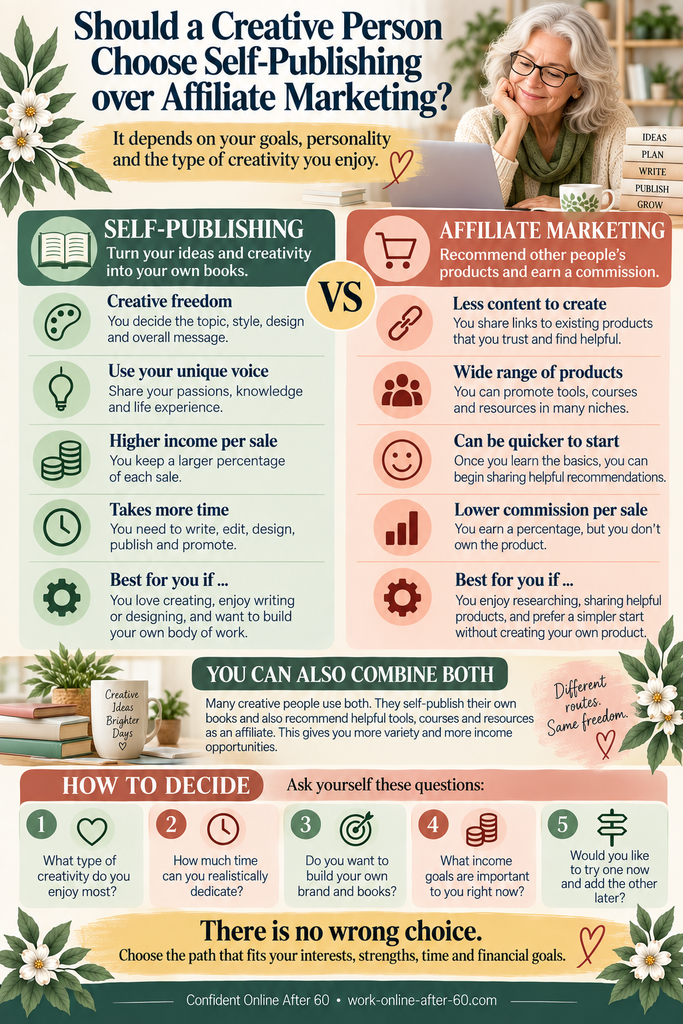
A creative person should choose self-publishing when making a book is the work they want to do. Affiliate marketing can suit someone who enjoys teaching, explaining or creating useful content around other people’s products. Creativity belongs in both. The better choice depends on what you want to create and how you want that work to support your life.
It is easy to feel that moving towards marketing means abandoning your identity as a writer. You do not have to make that choice. You can keep a creative project while testing a separate business idea, provided the combined workload remains manageable.
Ask what you want to own at the end
Self-publishing can leave you with an original work: a novel, memoir, practical guide or another book you are proud to share. That may have value to you even if sales are modest. If the book itself is the purpose, comparing it only with a commission figure misses something important.
Affiliate marketing produces a different kind of work. You might create a collection of tutorials, comparisons, demonstrations or newsletters that help people make decisions. You own your original content, subject to any agreements you make, but you do not thereby own the product you recommend.
Ask yourself: would I still want to make this book if it sold fewer copies than I hoped? Then ask: would I enjoy answering questions about this product if nobody bought it this week? Your answers can reveal which daily activities you are more willing to sustain.

The marketing lesson from my KDP experience
I spent three years self-publishing through Amazon KDP. Looking back, writing felt like roughly a quarter of the effort; marketing took the larger share. That is my personal description of the workload, not a rule for every author.
The creative part did not make the commercial part disappear. I still had to think about attracting readers and managing costs. That is why I see learning to explain an offer and reach an audience as relevant to creative people, whichever product they choose to sell.
Creativity in affiliate content can be useful and honest
A good product explanation involves decisions about structure, language, examples and visuals. Those are creative decisions. A short demonstration that makes a confusing task easier can be valuable work.
For example, a writer might explain how they organise research and compare suitable tools. A craft enthusiast might demonstrate a technique and discuss the materials involved. The recommendation should arise from the audience’s need, and any commission relationship should be clearly disclosed.
Creativity does not justify invented reviews. Describe only the experience you actually have. If your article is based on research rather than using the product, say so and show readers the information behind it.

Your book readers and your business audience may differ
People who enjoy your fiction may have no interest in running an online business. Sending every reader an unrelated marketing offer can weaken the relationship you worked to build.
Self-publishers who are actively asking about promotion, digital products or income models are a more natural audience for this discussion. Keep the content relevant to what people chose to hear about. Having someone’s contact details does not automatically mean they want a new kind of promotion.
A gentle way to test both interests
- Protect a writing slot. Reserve a manageable block of time for the book you care about.
- Choose one marketing topic. Pick a question you can answer accurately from experience and research.
- Create one useful piece. Publish an explanation or tutorial before committing to a large content schedule.
- Review the fit. Notice whether the work feels interesting, whether readers find it useful and whether the time commitment is sustainable.
You do not need to build two full businesses immediately. A small experiment can help you decide whether combining them is enjoyable or simply exhausting.
When could POP be relevant?
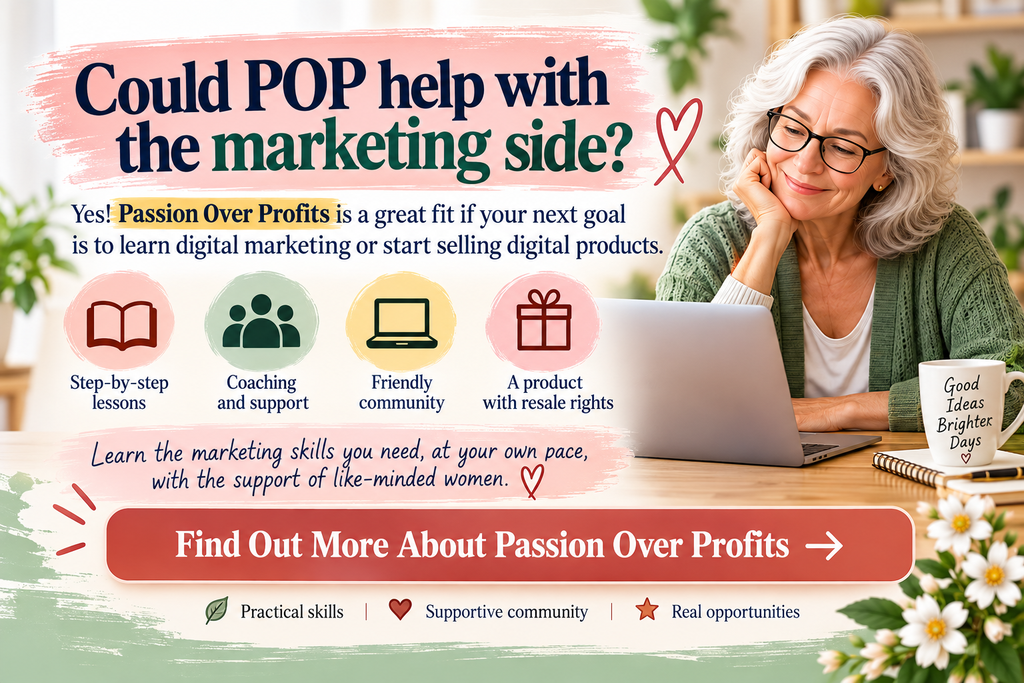
Passion Over Profits may appeal if you want to explore structured digital marketing education and the possibility of selling an existing digital product. Its provider describes training and community support alongside resale rights.
That could be relevant to a creative person who wants help understanding marketing. It does not teach every aspect of writing or publishing, and a resale licence is not ownership of your own original course. Whether the programme is worthwhile depends on your learning needs, the terms and the time you can give it.
Explore Passion Over Profits: what’s included, how the model works and whether it fits your goals
Questions creative people often ask
Does choosing affiliate marketing mean giving up my book?
No. You can set separate creative and commercial goals. Avoid promising yourself that an untested income stream will fund the book until it actually produces dependable money.
Should I choose whichever has the highest potential income?
Potential is not a forecast. Consider the work you can deliver well, the audience you understand and the costs you can manage. High headline earnings say little about your likely experience.
What if I only want to write?
That is a valid goal. Decide whether you want writing as a personal project, a publishing business or a paid service. Each involves different trade-offs. Our beginner comparison can help you choose a small next step.
Leave a Reply