
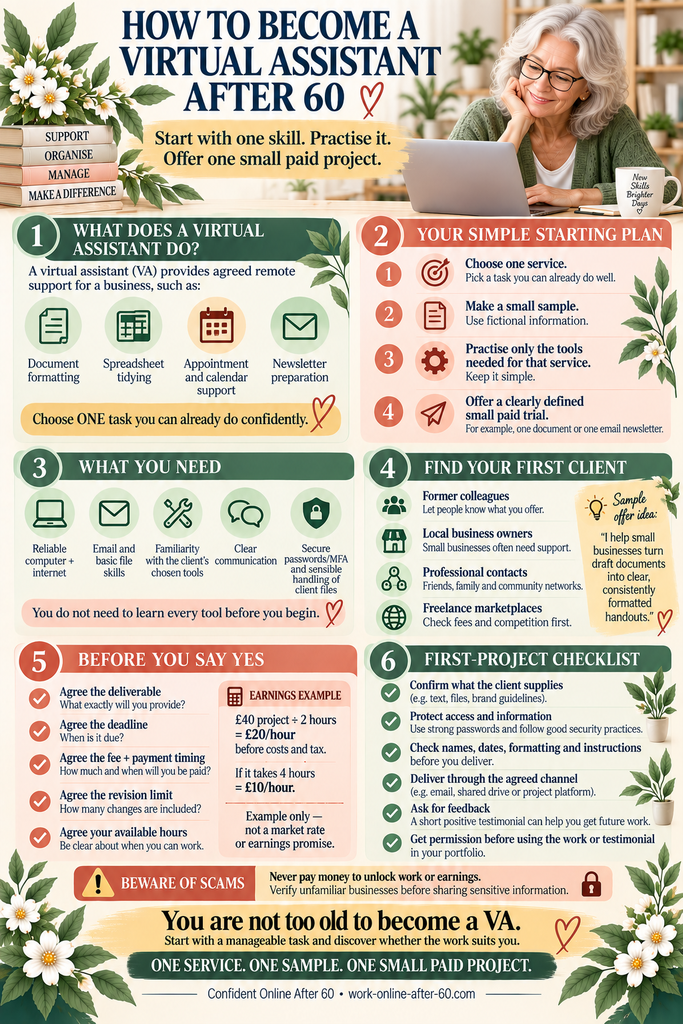
To become a virtual assistant after 60, start with one administrative skill, practise the tools needed for that task and offer a small paid project with a clear scope. You do not have to offer every service or be available all day. The aim is to find work that fits your abilities and the hours you want to spend.
Virtual assistance is one option in our guide to the best side hustles for women over 60 to earn extra cash. This article takes a closer look at how to test it without making a large upfront investment.
What does a virtual assistant actually do?
A virtual assistant provides agreed support remotely. A small business might need help formatting documents, maintaining an appointment calendar or turning supplied text into a newsletter. The work varies widely, so a useful offer names a specific task and result.
Experience gained through employment, volunteering, running a household or organising community activities may give you transferable skills. Clients will still need evidence that you can complete their particular task accurately and reliably.
Choose one beginner-friendly service
- Document formatting: Make supplied text consistent and easy to read.
- Spreadsheet tidying: Organise a simple list, check formatting and flag missing information.
- Appointment support: Help maintain a calendar within agreed rules.
- Newsletter preparation: Place approved text and images into a client’s existing template.
Choose the task you can already do most confidently. Avoid offering specialist bookkeeping, legal support or technical administration unless you have the appropriate competence. A narrow service is easier to explain, practise and price.

Make a sample before approaching clients
Create a small example using fictional information. For document formatting, prepare a two-page handout showing headings, readable spacing and consistent styles. For spreadsheet work, make a sample contact list with invented details and show how you would organise it.
Label it as a sample, not previous client work. Ask someone to review the result: is it accurate, clear and useful? Correct mistakes and note how long the task took. That timing will help you estimate a realistic project fee.
What equipment and skills do you need?
For these example services, a reliable computer, internet access and familiarity with the client’s chosen tools are a practical starting point. You should be comfortable opening and saving files, using email and joining a video call if required. Practise only the tools relevant to your first service.
Use strong, unique passwords and multi-factor authentication where available. Ask clients to give you appropriate access through their tools rather than share passwords in messages. Keep client files separate from practice material, and agree how confidential information will be handled and removed when work ends.

How to find your first virtual-assistant client
Begin with people who already know your reliability: former colleagues, local business owners or professional contacts. Explain a specific benefit rather than simply announcing that you are looking for work. Follow community-group rules before posting an offer.
Example introduction: “I help small businesses turn their draft documents into clear, consistently formatted handouts. I can format a document of up to five pages, using your supplied text and style preferences. Would a small paid trial be useful?”
You can also investigate freelance marketplaces, but check their current fees, payment arrangements and competition before joining. An account alone does not create demand. Keep a record of enquiries so you can improve the offer instead of repeatedly changing direction.
Agree the scope and price in writing
For a first project, define the deliverable, deadline, fee and payment timing. Specify the number of revisions and what happens if the client adds more work. Make your available hours clear, including when they can expect a reply.
Include preparation, messages and revisions when estimating your time. For example, a £40 project that takes two hours produces £20 per working hour before costs and tax; if it takes four hours, the figure is £10. These numbers illustrate the calculation, not market rates or guaranteed earnings.
Track your actual time after each project. A small trial can show whether the service is worthwhile and whether you enjoy it before committing to regular work.

A first-project checklist
- Confirm exactly what the client needs and what they will supply.
- Agree a written scope, price, deadline and revision limit.
- Use suitable access permissions and protect client information.
- Complete the work and check names, dates, formatting and instructions.
- Deliver through the agreed channel and request feedback.
- Ask permission before using any work or testimonial in your portfolio.
Watch for fake work-from-home offers
Verify an unfamiliar business independently before sharing sensitive information. Do not deposit money to unlock work or earnings, and be wary of a supposed employer asking you to deposit a cheque and send some money elsewhere. The FTC’s job-scam guide explains these warning signs.

Frequently asked questions
Am I too old to become a virtual assistant?
Age does not establish whether you can deliver a service. Focus on the task, your skills and a reliable way of working. Start with a manageable project so you can assess the fit for yourself.
Do I need a paid course before starting?
For the simple administrative examples above, first practise with tools you already use and their help resources. Consider training only when you can identify a specific skill gap and judge whether the course addresses it.
Can I work just a few hours a week?
You can design your offer around limited hours, but the client must agree to that arrangement. Deadline-based tasks may fit better than roles requiring continuous availability.
Your next step
Choose one service and make one sample this week. If you would prefer creating a product to working on client deadlines, explore our guide to selling digital downloads after 60. For a wider comparison, return to the side-hustle guide for women over 60.
Choosing tools and training for your first service
Let your first service guide any purchase. Document-formatting work calls for different skills from newsletter preparation. Try the tools you already have, identify one specific gap and compare resources that address it. Check whether the client supplies access before taking out your own subscription.
Explore how relevant recommendations fit into an income strategy using affiliate marketing.
If you are also considering selling digital products alongside client services, our POP overview explains that separate route and the learning involved.
Explore Passion Over Profits: what’s included, how the model works and whether it fits your goals
Leave a Reply