A practical way for women over 60 to earn income is to use what they already know, keep costs low, and try one idea before taking on more. If you like explaining helpful products or resources, affiliate marketing could be a good fit. You help a specific group make smart choices, and you earn a commission when your recommendation leads to a purchase.
Affiliate marketing is not the right choice for everyone. If you need steady income quickly, offering a service for a set fee or taking a job might be a better place to start. But if you like sharing what you learn and can wait for your audience to grow, building a business around recommendations is worth considering.
Why affiliate marketing can make practical sense
With affiliate marketing, you refer potential customers to another business using a trackable link or code. The programme determines which actions earn commission and when payment is due. You are responsible for your content and marketing; the seller normally supplies the product and handles the purchase.
This can let you begin without developing a course, manufacturing a product or keeping stock. It still involves work: researching an offer, producing useful content, attracting readers and maintaining accurate recommendations. Your time and any website or tool expenses are real costs.
The attraction is a simpler starting role. You do not have to do every part of a business yourself. You do need to help someone make a decision they are comfortable with.

Begin with experience you already have
Maybe you know about gardening, crafts, planning trips, taking care of a home, or picking up new skills later in life. You might also remember feeling unsure about a decision and wishing someone could explain things clearly.
Your experiences can help you come up with good questions. Still, it’s important to check out a product and know what it can and can’t do. Being over 60 doesn’t make you an expert, but it also doesn’t stop you from learning new things.
To see why this website takes a practical approach, read Silviya’s story. She shares what she learned from her first tries at earning online and how she decided to focus her efforts.
A focused strategy: one audience, useful answers and relevant offers
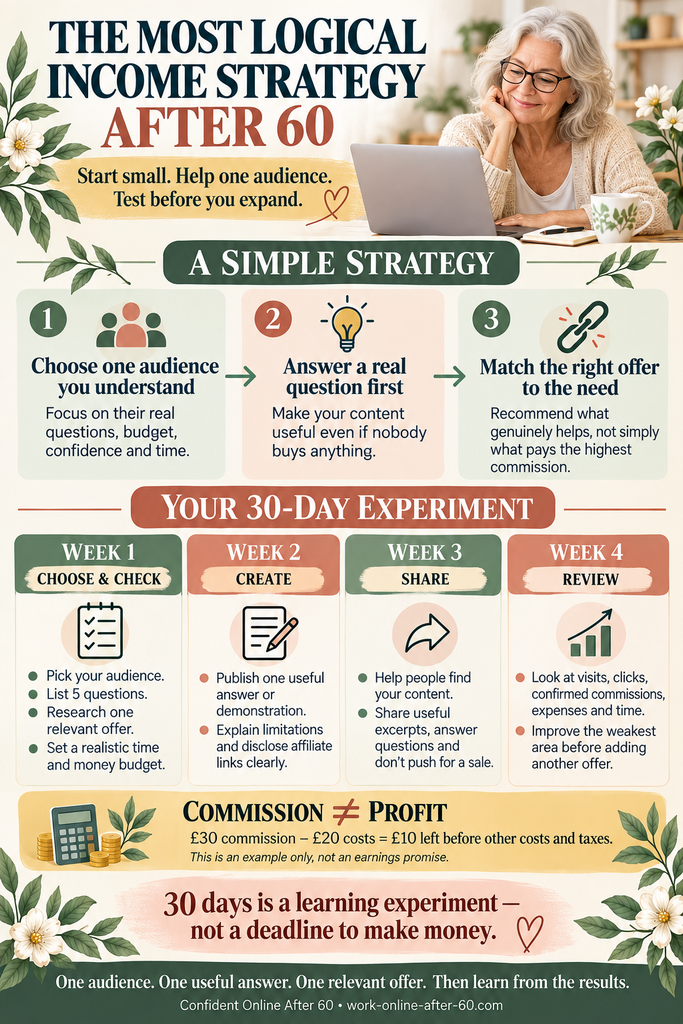
1. Choose an audience you understand
If you try to write for “everyone who wants more money,” your article will be too general. But if you focus on “women over 60 learning to create their first helpful online content,” you have a clear person in mind. This helps you think about their questions, confidence, budget, and time.
2. Answer a real question before recommending anything
Begin by focusing on the task your reader wants to finish. Explain what they need to do, offer a helpful first step, and talk about their options. Your article should be helpful even if the reader doesn’t buy anything.
For example, if someone wants to know how to film a product demonstration, they need tips on lighting, sound, and what to say. Our beginner’s guide to Amazon product videos gives a practice script before suggesting any equipment to buy.
3. Match different offers to different needs
A good offer should solve the problem you just talked about. It could be a tool, a product, or a learning resource. Be sure to explain what’s included, who it’s for, how much it costs, and when someone might not need it.
Don’t pick something just because it pays a high commission. An expensive program isn’t always right for someone who only needs a free tutorial or a simple tool. Telling readers, “you may not need this yet,” helps them make better choices.

A range of offers can serve one audience
You don’t have to focus your entire business on just one product. A reader might need help picking a direction now, want tips for creating content next month, and look for advanced skills later on. Share different resources in your articles when they match the reader’s current question.
See your recommendations as a helpful set of options, not a list of things everyone must buy. Beginners should get value from your content without buying everything. People with more experience might want deeper training or extra support.
- Getting started: Show the options and help readers pick an easy first step.
- Learning a specific skill: Suggest focused training or tools that solve a clear problem.
- Building with support: Describe what a bigger program or coaching offer includes and who it’s for.
- Choosing between options: Compare what’s available, including free resources or waiting to buy.
How to think about a $100 offer and a $997 program
Price alone does not tell you which option is right. A $100 resource might be enough for one specific task; a $997 program must justify its cost through its content, support, and suitability. These prices illustrate different purchasing decisions, not verified descriptions of particular products.
For a lower-priced offer, make the practical outcome clear. For a larger purchase, readers need more detail: the curriculum, teaching format, support arrangements, time required, total costs, and refund terms. Neither price level guarantees quality or income.
You can recommend both within the same business without placing both in every article. Match the recommendation to the reader’s problem and budget, not to a sales target.

Affiliate commissions and resell rights are different
In an affiliate setup, you earn a commission by referring a buyer, following the provider’s rules. With resell rights, a license might let you sell someone else’s product directly. The license explains what you can change, how you can market it, and what responsibilities you have.
Some courses include training, resale rights, and access to other affiliate offers. Make sure to explain each part on its own. Remember, the money you get from a sale is not all profit. Payment fees, marketing costs, refunds, and other expenses can reduce what you keep. Recurring commissions also depend on the program’s rules and whether customers keep their subscriptions.
What to check before promoting an offer
- The customer benefit: What specific task does it help someone complete?
- The full cost: Are there subscriptions, upgrades, required extras or other ongoing charges?
- The learning demands: What skills, time and equipment does the buyer need?
- Your evidence: Have you personally used it, reviewed a demonstration or only read the seller’s claims?
- The terms: What are the cancellation, refund, support and access arrangements?
- The affiliate conditions: What counts as a qualifying referral, what promotion is permitted and when can commissions be reversed?
Keep your own experience separate from what you learn through research. Saying “I have used this feature” is different from saying “the provider says this feature is included.” Also, examples of earnings from the seller or testimonials from others do not guarantee what your reader will earn.

How Amazon fits into this strategy
Amazon is just one type of affiliate program, not the only way to do affiliate marketing. Recommending products can help your audience when they need advice on what to buy. Some programs focus on services or educational resources, so always check if a program fits your needs.
To understand the difference between linking to Amazon and earning from videos shown there, check out the comparison between Amazon Associates and the Influencer Programme. Remember, just opening an affiliate account does not mean you get access to every way to earn.
Make the commercial relationship clear
Let your readers know if you might earn a commission from your recommendations. UK ASA rules say affiliate ads must be easy to spot, and social posts usually need a clear “Ad” label at the start. US FTC rules also require you to clearly share any business relationships.
Follow the disclosure rules for your affiliate program, your audience, and the way you publish. Put the disclosure where people will see it, not hidden away on another page. Being open about your relationship builds trust and fits well with helpful content.
A manageable 30-day experiment
- Week 1: Choose and check. Figure out who your audience is, write down five questions they often ask, and look into one offer that fits. Decide on a budget and how much time you can realistically spend.
- Week 2: Create something useful. Share a detailed answer or a demonstration. Be clear about any limits, and add a proper disclosure if you use an affiliate link.
- Week 3: Help people find your content. Share a helpful excerpt on a channel that fits, and follow both its rules and your affiliate program’s terms. Answer any questions, but don’t push people to make a purchase.
- Week 4: Review your progress. Check your visits, questions, allowed click reports, confirmed commissions, expenses, and time spent. Work on improving the weakest area before you try another offer.
Think of these thirty days as a time to learn, not as a deadline to make money. If your site is new, you might not get much traffic at first. Don’t let a slow month push you into buying more courses or starting lots of new projects.

Keep the income calculation realistic
Commission is different from profit. For example, if you make three sales and earn £10 from each, you get £30 in commission. If you spend £20 on tools, you have £10 left before other costs and taxes. This is just an example and does not predict your sales or commission rate.
Keep track of the time you spend as well. Your content might stay helpful after you publish it, but it could need updates and might not make enough sales to pay for itself. Make sure you cover your basic expenses while you try something new.
Frequently asked questions
Is affiliate marketing the most logical strategy for every woman over 60?
No. Affiliate marketing might suit someone who likes creating helpful content and is comfortable with uncertain results. If you prefer clear tasks and a set payment, you may want to look into virtual assistance or another service.
Do I need to be an expert before starting?
You should know enough to make your content accurate and useful. You can share what you are learning, but don’t claim to be an expert on something you haven’t tried yourself.
Can I begin with a small audience?
You can start by making helpful content, but keep in mind that each program has its own rules. Having a small audience doesn’t mean you’ll make sales, and even a big audience doesn’t always mean your offer will be a good fit.
Should I recommend several offers at once?
Yes, as long as each offer meets a clear need. You might have ten good products in your business, but only recommend one or two in a single article. Group your suggestions by what your reader wants to accomplish, and make it easy for them to compare options.
Your next step
Write down who you want to help, what question they need answered, and one resource that could truly help them. Make sure to check that resource carefully before you recommend it. If you’re still figuring out your path, visit Start Here or look into practical ways to earn money from home at 65.
Explore a program that combines training and a digital product
Passion Over Profits is worth looking at if you want step-by-step digital marketing lessons and are interested in a product you can resell. Our detailed guide shows how this model works with affiliate marketing, what’s included, and what to think about before you join.
Explore Passion Over Profits: what’s included, how the model works and whether it fits your goals
Leave a Reply