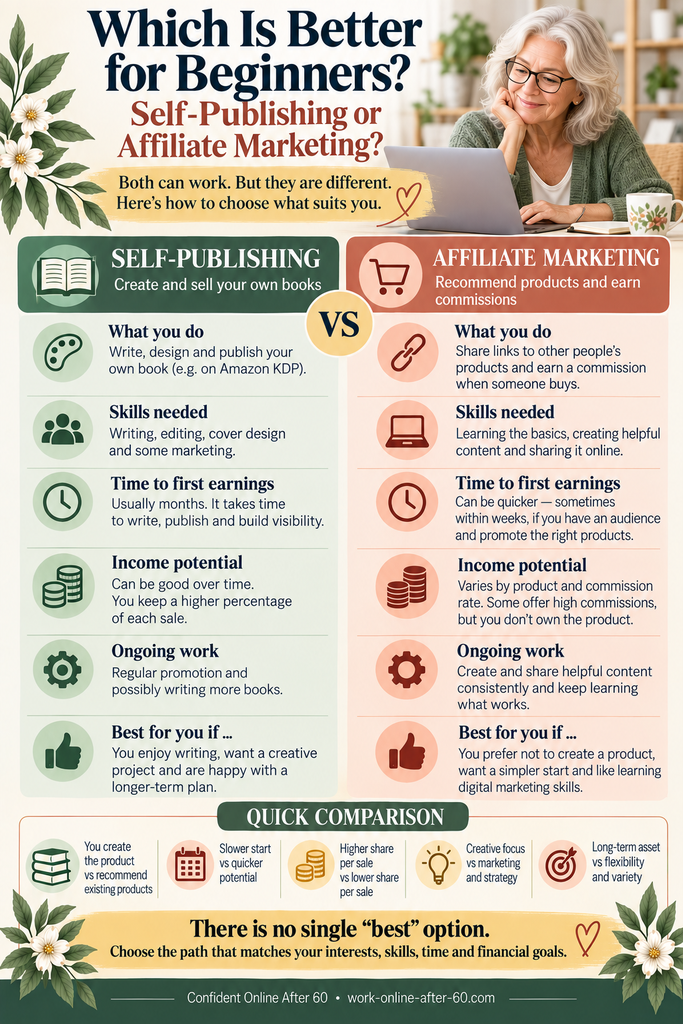
Affiliate marketing may be simpler for a beginner who wants to practise marketing without creating a book first. Self-publishing may be the better fit when producing a book is the main goal. Neither is automatically easier to earn from. Both need an audience, useful content and a way to turn interest into a purchase.
After three years in KDP, my strongest lesson was that completing the product did not complete the business. Before choosing your route, consider which work you actually want to do and which skills you want to learn.
Choose the outcome before the business model
“I want to publish my story” and “I want to learn how to earn by recommending useful products” are different ambitions. The first points towards authorship. The second points towards affiliate marketing. You can pursue both eventually, but beginning with two unfamiliar businesses can make it harder to understand what is working.
If you need predictable income soon, neither model should be treated as a dependable solution. A defined service with an agreed fee may be a more suitable option to investigate while you develop longer-term projects.

What would you do first as a self-publisher?
You would decide who the book is for, develop the manuscript and prepare it for readers. That includes decisions about editing, cover design, formatting, pricing and distribution. You can do some tasks yourself or pay for selected help.
A good beginner experiment is smaller than “write a whole series”. Prepare a clear book concept and one sample chapter, then ask suitable readers whether the promise is interesting and the writing delivers it. Feedback is not proof of sales, but it can reveal confusion before you invest in a finished product.
What would you do first as an affiliate marketer?
You would choose an audience, identify a problem you understand and investigate products that might help. A participating affiliate programme provides the terms for referrals and commissions. You create useful content and make your commercial relationship clear when recommending through affiliate links.
A good first experiment is one helpful tutorial or comparison based on accurate knowledge. Explain who a product is for, what it does and where it falls short. Check the programme’s approval requirements and permitted promotional methods before adding links.
You do not avoid writing by choosing affiliate marketing. You may write articles, emails, explanations or video scripts instead of chapters. You also need to keep recommendations up to date.
Which costs are you prepared to manage?
Self-publishing can involve editing, covers, proofs and promotion. Affiliate marketing can involve websites, email tools, content production and optional training. The exact costs depend on your choices; neither route requires buying every tool a course creator recommends.
Write down a maximum test budget, including subscriptions after any introductory price ends. Separate costs you must pay now from optional upgrades. Do not compare an expensive publishing plan with a supposedly free affiliate plan unless both genuinely match what you intend to do.

Which daily tasks suit you?
- Choose a book-first experiment if you enjoy sustained writing, have a clear reader in mind and want your own finished work.
- Choose an affiliate-first experiment if you enjoy explaining and comparing products and want to practise reaching an audience before creating a large product.
- Pause both if the main attraction is a promise of quick, effortless income or if the proposed spending would be uncomfortable.
Being a beginner after 60 does not mean starting without useful knowledge. Experience in a hobby or profession may help you understand people’s questions. It still needs to be paired with current product knowledge and practice.
A four-week way to explore your choice
- Week one: Define one audience and one question or reading experience you want to serve.
- Week two: Create a small sample: a chapter for the book route or a useful article for the affiliate route.
- Week three: Share appropriately with relevant people and ask specific questions about clarity and usefulness.
- Week four: Review the work, feedback, time and costs. Decide what the next small test should be.
This is a learning plan, not a four-week earnings forecast. A small test can help you notice whether you enjoy the work before committing to a larger purchase or project.
Is POP an option for beginners?
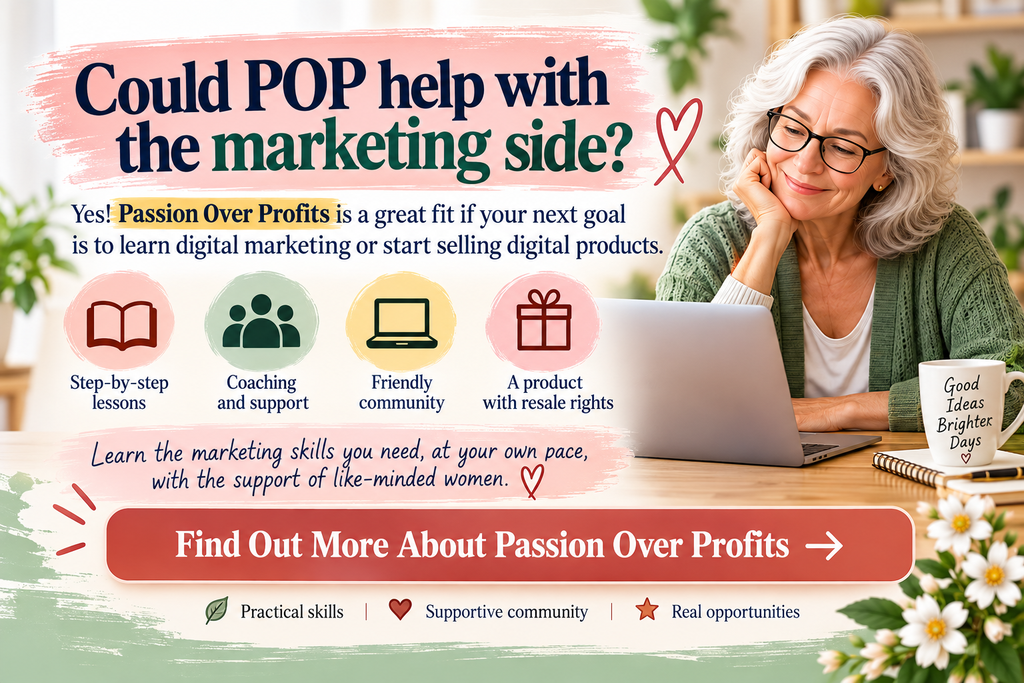
The provider presents Passion Over Profits as digital marketing education with support and a product carrying resale rights. It may appeal if you want a structured learning route and are interested in selling an existing digital product.
Its main resale component is different from simply joining an affiliate programme. The listed US$997 purchase is a significant commitment, and the licence, support and additional costs deserve a careful look. POP is optional; you do not have to buy it to explore affiliate marketing.
Explore Passion Over Profits: what’s included, how the model works and whether it fits your goals
Questions beginners often ask
Which route pays faster?
There is no reliable universal answer. You must first attract a buyer, and payment schedules vary. Compare actual terms rather than treating a sales notification as available cash.
Can I publish books and recommend products?
Yes, if the recommendations fit your audience and follow the relevant rules. Start with one manageable project so you can judge the workload.
Where should I look next?
Read the practical economics of self-publishing and the downsides and ways to manage them before deciding how much to invest.
Leave a Reply